Most ecommerce brands don’t fail because the product is wrong. They fail because the business behind the product can’t keep up with itself — orders get missed, inventory counts drift out of sync, customer questions pile up in three different inboxes, and the founder ends up spending more time firefighting than building.
The brands that scale past that chaos almost always have one thing in common: they treat their software stack as seriously as their product line. Not as a nice-to-have. As infrastructure.
Here’s why that shift matters, and what it actually looks like in practice.
Manual Processes Don't Break Slowly — They Break All at Once
A spreadsheet-and-sticky-notes system can look like it’s working for a surprisingly long time. Then a viral post hits, a wholesale order comes in, or the holiday rush starts, and every crack in the process shows up simultaneously. Orders get duplicated. Stock goes negative. Someone promises a restock date nobody can actually hit.
The businesses that weather those spikes aren’t the ones with the biggest teams — they’re the ones where the routine work already runs itself. Order routing, inventory sync across channels, shipping notifications, and basic customer replies shouldn’t require a human making the same decision for the two-hundredth time that week. Software exists specifically to absorb that repetition so your team’s time goes toward the decisions that actually need a person.
You Can't Manage What You Can't See
Ask most early-stage ecommerce founders what their true customer acquisition cost is, or which SKUs are actually profitable after returns and ad spend, and you’ll often get a shrug. Not because they don’t care — because the data lives in five disconnected places and nobody has time to reconcile it by hand.
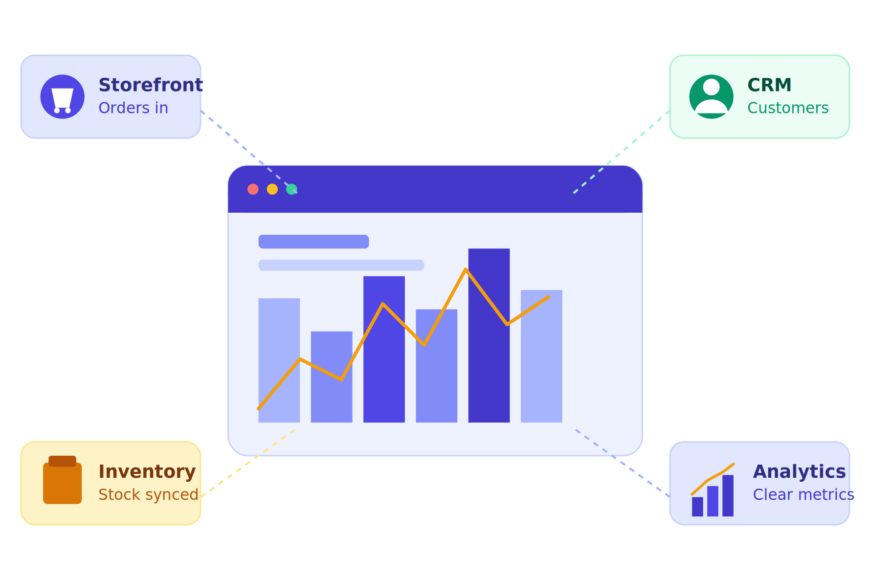
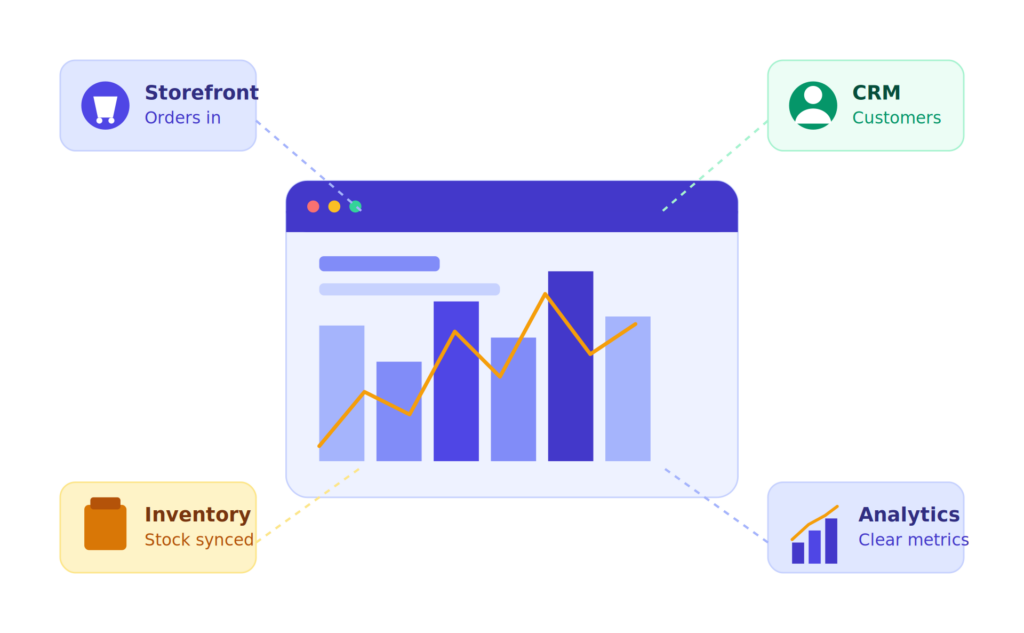
The right tools change that by default. A connected stack — sales channel, inventory, CRM, and financials talking to each other — turns “I think we’re doing okay” into “here’s exactly which products, channels, and campaigns are actually driving profit.” That’s not a reporting luxury. It’s the difference between growing on purpose and growing by accident.
Customer Expectations Have Quietly Gotten Much Higher
Shoppers today compare every brand’s experience against the best one they’ve ever had, regardless of your size. Order confirmation the instant they check out. A tracking link that actually works. A support reply that doesn’t ask them to repeat their order number for the third time. None of that happens by accident at scale — it happens because a CRM, a helpdesk, and an order management system are quietly doing their jobs in the background.
Brands running on disconnected tools — or no tools at all — end up with support teams who are guessing instead of helping, because they can’t see order history, past conversations, or shipping status in one place. That gap is invisible to you until a customer feels it, and by then it’s already cost you the relationship.
What "the Right Tools" Actually Means
It’s not about buying every piece of software available. It’s about closing the specific gaps that are costing you time, money, or customers right now:
- Order and inventory management that keeps every channel in sync automatically, so you’re never overselling or manually updating three spreadsheets
- A real CRM that gives every team member — sales, support, fulfillment — the same complete view of each customer
- Marketing automation that follows up, re-engages, and nurtures leads without someone manually sending every email
- Payment and financial tools that reconcile themselves instead of eating an afternoon every month
- Analytics that are actually connected, so a decision about ad spend or inventory is based on real numbers, not a gut feeling
None of this replaces good products or good marketing. It’s what lets good products and good marketing actually turn into a business that runs — and scales — without the founder holding every piece together by hand.
The Real Cost of Waiting
The businesses we see struggle most aren’t the ones that invested in the wrong software. They’re the ones that waited too long to invest in any — patching workflows with manual labor until the operational debt became too expensive to ignore. By the time they call for help, they’re not just building a system; they’re untangling years of workarounds first.
Building the right stack early doesn’t just save time. It changes what your business is capable of becoming, because every hour that isn’t spent manually reconciling orders is an hour spent on the product, the customer relationship, or the next channel you’re ready to grow into.
If your current tools feel like they’re holding your brand back instead of moving it forward, that’s usually a sign it’s time for a proper audit — not another workaround. Reach out and let’s map out what your stack actually needs.

